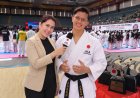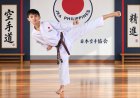
Official Brand Ambassador Interview — Shemael Murillo
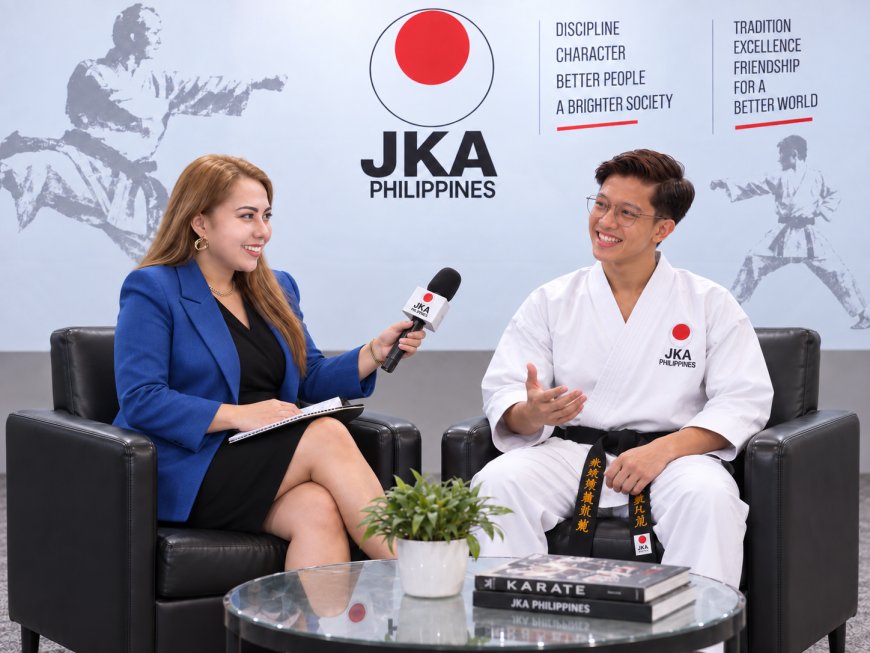
Part I — Meet Shey Mael
1. What is your complete name?
My complete name is Shemael Morata Murillo.
2. What name would you like JKA Philippines to use publicly?
I would like to be known privately as a person as Shemael Murillo. I go publicly with screen Shey Mael
3. Where were you born, and where are you currently based?
I was born and raised in Antipolo City, Rizal, where I am currently based.
4. What is your field of study?
I am studying Accountancy. I am drawn to it because it demands accuracy, discipline, and responsibility—qualities that karate has also taught me.
5. How would you describe yourself in three words?
Kind, honest, and respectful.
6. What are your interests and passions outside karate?
Outside karate, I am interested in building a secure future and eventually achieving financial independence. I want to use my education wisely and create opportunities not only for myself, but also for the people I care about.
7. What is one interesting or surprising fact about you?
I serve as the head altar server. Many people know me as a karate athlete, but my service in the Church is also a very important part of who I am.
8. What personal quality are you most proud of?
I am proud of my perseverance. Balancing life as a student-athlete is not always easy, but I continue to pursue my education and my dream in karate with commitment.
9. Who has played the most important role in your life?
My parents and family have shaped me the most. Their sacrifices, guidance, and constant support give me the strength to continue, especially when training and competition become difficult.
10. What dream are you currently pursuing?
My dream is to represent the Philippines in major international karate competitions and prove that a young athlete who begins with discipline and faith can reach the world stage.
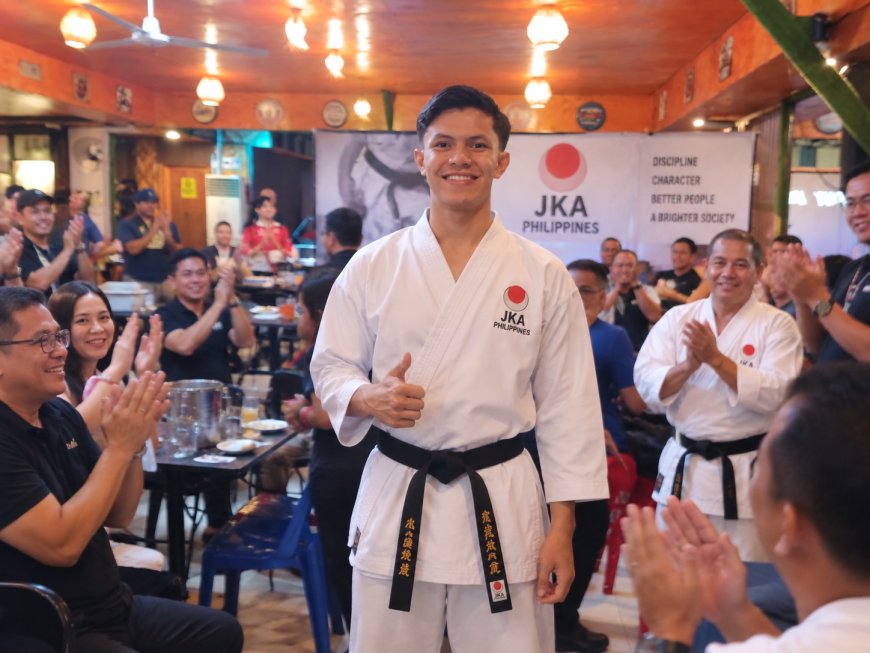
Part II — His Karate Journey
11. When and why did you begin practicing karate?
I began practicing karate when I was six years old. At first, I wanted to learn how to protect myself, but as I grew older, karate became much more than self-defense. It became a source of discipline, confidence, and direction in my life.
12. What first attracted you to JKA and Shotokan karate?
I was drawn to the discipline and traditional values of JKA Shotokan karate. Its emphasis on humility, respect, and proper character showed me that karate is not simply about becoming a strong fighter—it is about becoming a better person.
13. What is your current rank, dojo, and JKA Philippines affiliation?
I am a second-dan black belt and a proud member of JKA Marikina under JKA Philippines.
14. Who introduced you to karate?
A neighbor who practiced Shotokan karate first introduced me to the art. That simple introduction eventually became a lifelong journey.
15. Which instructors or mentors have influenced you the most?
Sensei Sandie in Antipolo and Sensei Naomi Claire of JKA Marikina have had a strong influence on me. They have helped develop not only my technique, but also my discipline, attitude, and understanding of what it means to be a true karateka.
16. What is your most unforgettable experience inside the dojo?
One of my most unforgettable experiences was being injured during kumite. It was painful and frightening, but it taught me to respect my body, recover patiently, and return to training with greater awareness and determination.
17. What is your proudest karate achievement?
Winning a gold medal in an international tournament remains one of my proudest achievements. Standing there after all the demanding preparation made every sacrifice feel worthwhile—and reminded me that success is never earned alone.
18. What has been the most challenging part of your karate journey?
The greatest challenge has been maintaining commitment and consistency. Motivation can change from day to day, but discipline means continuing to train even when I am tired, busy, or disappointed.
19. Was there ever a time when you wanted to stop training? What inspired you to continue?
Missing selection in kata for a tournament in Japan was deeply disappointing. For a moment, I questioned myself, but the experience eventually gave me a stronger reason to continue. I decided to treat the setback as preparation for my next opportunity and return better, stronger, and more focused.
20. How has karate changed you physically, mentally, and emotionally?
Karate has made me physically stronger and more resilient. Mentally, it has sharpened my focus and discipline; emotionally, it has taught me to remain calm under pressure, accept correction with humility, and face challenges with courage.
21. Which do you enjoy most—kihon, kata, or kumite—and why?
I enjoy kumite the most because it is where my instincts, preparation, and composure are tested in real time. It gives me a healthy way to release tension while teaching me to control my emotions rather than be controlled by them.
22. What is your favorite technique, and what does it reveal about your personality?
My favorite technique is gyaku-zuki, or reverse punch. It is direct, decisive, and effective when executed with proper timing. It reflects my willingness to stand my ground, face challenges directly, and commit fully when an opportunity appears.
23. What lesson from karate do you apply most often in everyday life?
Respect. Karate taught me that how we treat people—whether they are senior or junior, strong or inexperienced—reveals more about us than any belt or medal.
24. How do you prepare before an important competition, demonstration, or grading?
I prepare through consistent training rather than relying on last-minute effort. I also pay attention to proper food, rest, hydration, and mental focus so that I can enter the event confident in the work I have already done.
25. What karate goal are you still determined to achieve?
I want to enter every match prepared to win, while understanding that every result has something to teach me. My larger goal is to keep improving until I can consistently compete at the highest international level.
Part III — The Story Behind the Athlete
26. What personal challenge have you overcome through discipline and perseverance?
I have learned to overcome self-doubt and the temptation to take the easier path. Preparing for tournaments taught me that confidence is built quietly—through repeated training, sacrifice, and the decision to keep showing up.
27. How did karate help you during a difficult period in your life?
Karate gave me structure when life felt uncertain. The routine of training helped calm my mind, while the lessons of patience and perseverance reminded me not to give up when circumstances became difficult.
28. What sacrifice have you made in pursuing your goals?
I have sacrificed free time, rest, and many leisure activities to train regularly. Those sacrifices can be difficult, especially at my age, but I accept them because meaningful dreams require real commitment.
29. Who do you most want to make proud, and why?
I want to make my parents, instructors, and God proud. My parents support my dreams, my instructors patiently guide me, and my faith gives me strength. Every achievement is also my way of honoring what they have given me.
30. What experience has most influenced the person you are today?
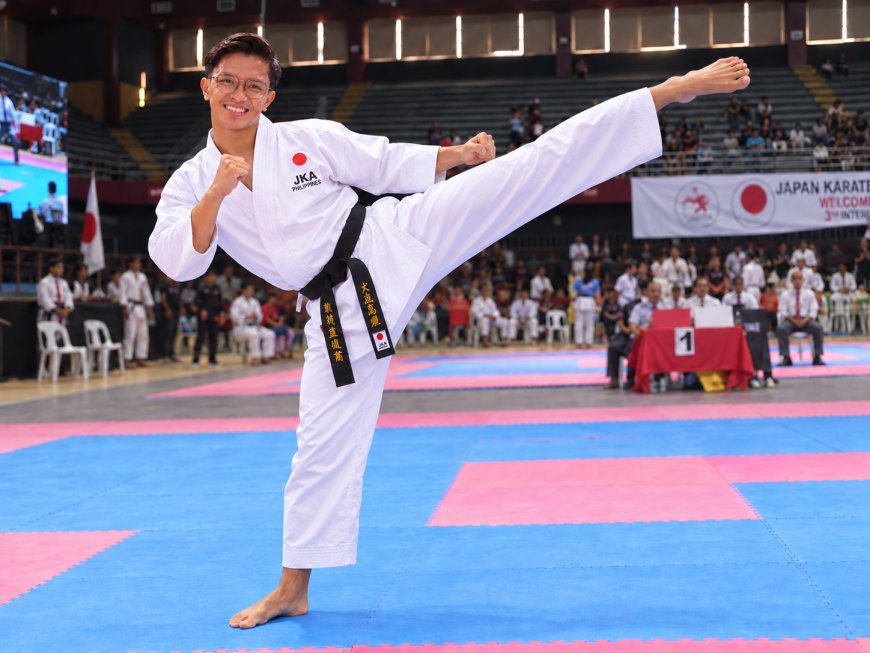
Competing in the World Cup in Japan changed how I saw both karate and myself. It exposed me to a higher level of competition and taught me that reaching the world stage requires faith, serious preparation, humility, and the courage to keep learning.
31. What does true strength mean to you?
True strength is the ability to remain calm, humble, and kind even when you have the power to do otherwise. Physical ability matters, but character determines how that ability is used.
32. What does courage look like outside the dojo?
Outside the dojo, courage means doing what is right even when it is unpopular, serving others without seeking attention, and remaining faithful to your values when they are tested.
33. How do you respond to failure, rejection, or disappointment?
I allow myself to feel disappointed, but I do not allow disappointment to decide my future. I study what went wrong, accept what I need to improve, and return to training with a clearer purpose.
34. If your younger self could see you today, what would make him most proud?
The six-year-old boy who first entered a dojo would probably be proud that I stayed with the journey. He would see that I did not become perfect, but I remained faithful, humble, and determined to pursue the dream we began together.
35. What would you say to someone who thinks they are too young, old, shy, weak, or inexperienced to begin karate?
You do not have to be strong or confident before you begin—karate helps you develop those qualities. Start where you are, remain consistent, and give yourself the chance to discover what you can become.
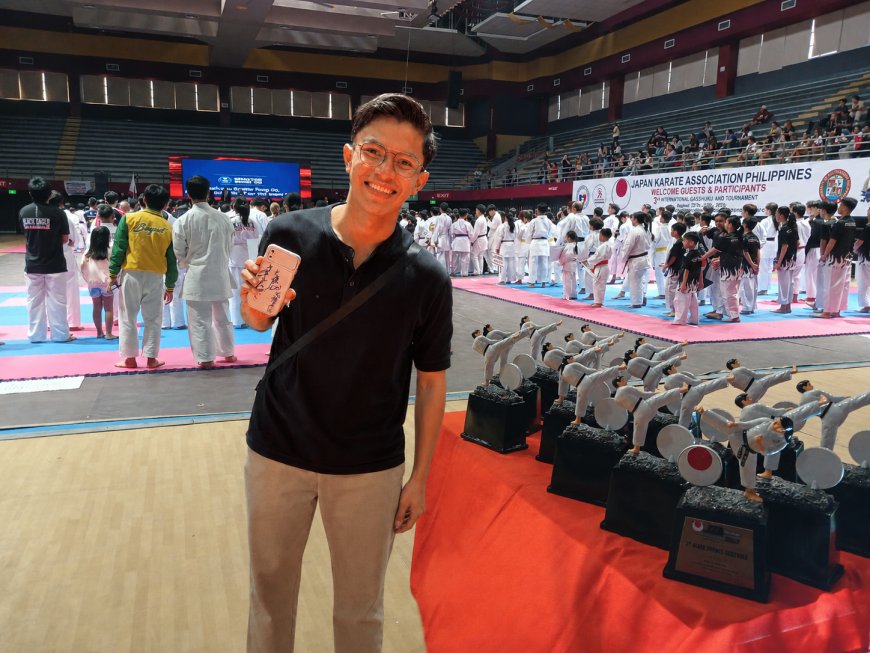
Part IV — Representing JKA Philippines
36. What was your first reaction when you learned that you had been selected as a JKA Philippines Brand Ambassador?
I felt a mixture of joy, disbelief, and gratitude. It was an honor I did not want to take lightly, and my first thought was to thank God, my family, my instructors, and everyone who believed in me.
37. What does this role mean to you personally?
It is both an honor and a responsibility. It allows me to give back to the community that helped shape me and to represent, through my actions, the values of the martial art I love.
38. What does it mean to carry the name and emblem of JKA Philippines?
It means carrying the honor, tradition, and standards of every JKA member in the country. The emblem is not merely something I wear—it reminds me that my conduct must reflect something larger than myself.
39. What values do you want people to see in you as a Brand Ambassador?
I want people to see humility, respect, discipline, faith, and a willingness to serve. I hope these values are visible not only in photographs or interviews, but especially in how I treat people every day.
40. How will you represent JKA Philippines inside and outside the dojo?
Inside the dojo, I will train sincerely, listen carefully, and give my best. Outside it, I will try to live with the same discipline, integrity, and respect that JKA expects from its practitioners.
41. What responsibility comes with being one of the public faces of JKA Philippines?
I must remember that people may form an impression of JKA Philippines through my behavior. That means being thoughtful about my words, responsible in public and online, and willing to lead through example.
42. What do you hope to contribute through this role?
I hope to introduce more people to JKA karate, encourage young practitioners to remain committed, and help build a community that is strong, welcoming, and united by shared values.
43. Which group would you especially like to inspire?
I especially want to inspire children and young people. I began at six, so I understand how one encouraging experience, instructor, or role model can influence the direction of a young person’s life.
44. How can you introduce JKA karate to people who have never practiced martial arts?
I can share my own journey honestly—the victories, setbacks, discipline, and growth. I want people to see that JKA karate develops character and confidence, not only fighting ability.
45. How is karate as a fighting activity different from karate as a way of life?
Fighting focuses on defeating an opponent; karate as a way of life teaches you to master yourself. Its real lessons appear in everyday choices—how you respond to pressure, treat others, and carry yourself when nobody is watching.
46. How can JKA training help young people develop confidence, discipline, and respect?
Training gives young people clear standards and achievable challenges. As they learn to follow instruction, correct mistakes, and improve through effort, they develop genuine confidence as well as respect for themselves and others.
47. How can karate help prevent bullying and encourage responsible behavior?
Karate can build the confidence to stand against bullying and the self-control not to become a bully. A properly trained karateka understands that skill brings responsibility and that violence is never something to show off.
48. How can JKA Philippines contribute to stronger families and communities?
JKA Philippines can create spaces where children, parents, instructors, and athletes share values such as respect, discipline, cooperation, and service. When those values leave the dojo and enter the home, the whole community benefits.
49. What does it mean to represent the Philippines through Japanese karate?
It is an opportunity to honor Japanese tradition while carrying Filipino warmth, faith, resilience, and pride. It shows how two cultures can meet through discipline and mutual respect.
50. Which Filipino qualities complement JKA traditions?
Our respect for elders, close family ties, humility, hospitality, and faith complement JKA’s emphasis on courtesy, discipline, and character.
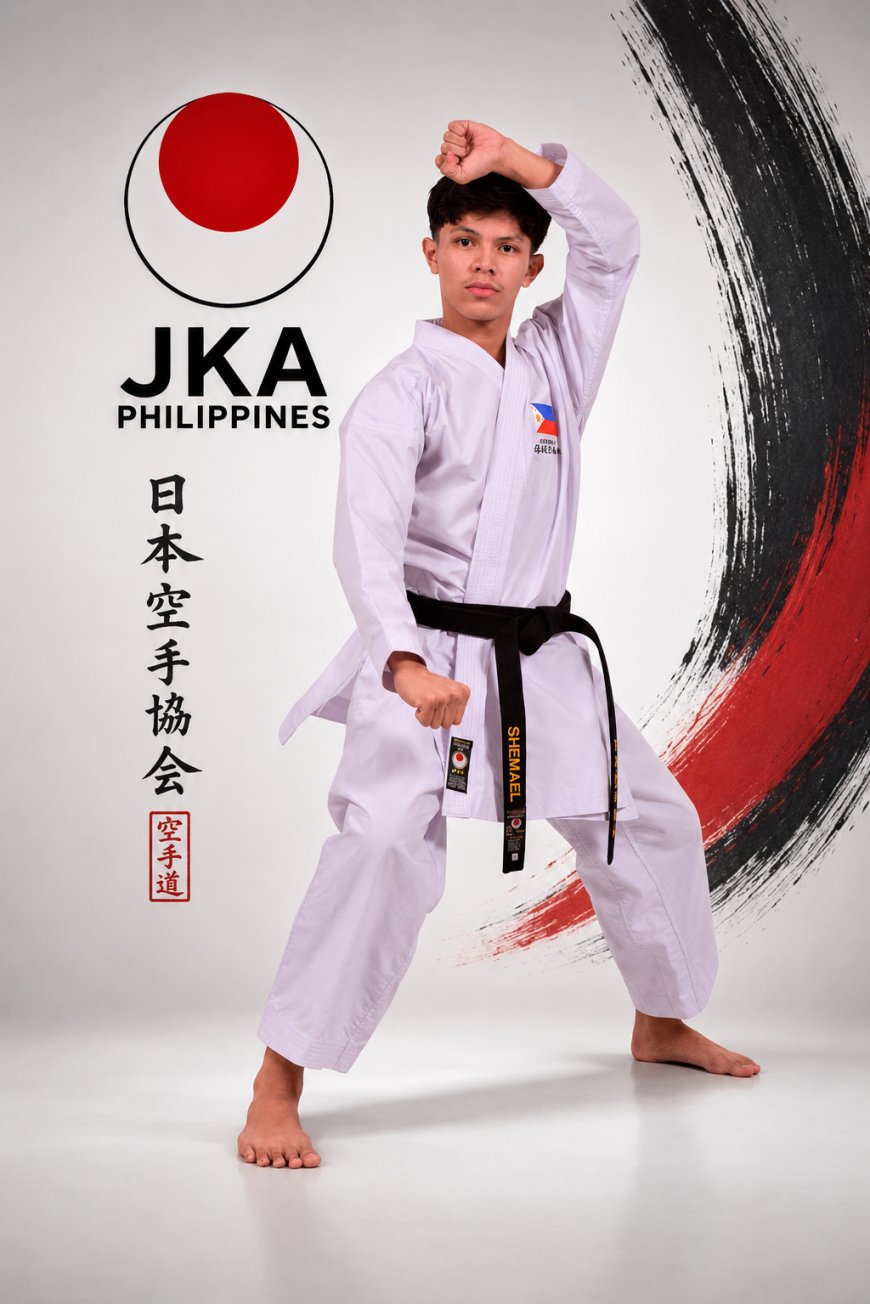
Part V — Character, Discipline, and the Dojo Kun
51. What does the JKA Dojo Kun mean to you personally?
The Dojo Kun is more than something recited after training. It is a moral compass that reminds me how a karateka should think, behave, and continue growing inside and outside the dojo.
52. Which principle speaks to you most strongly?
“Strive for perfection of character” speaks to me most strongly because karate is ultimately about who we become. Technique can win a match, but good character guides an entire life.
53. How do you practice respect and courtesy in daily life?
I greet people properly, listen to my elders, serve in the Church, and try to treat everyone with equal dignity. Respect becomes meaningful through small, consistent actions.
54. Which is more important: winning a medal or developing good character?
Good character is more important. Medals are meaningful reminders of hard work, but their shine eventually fades. The way we treat people and the good we leave behind can last far longer.
55. What has defeat taught you?
Defeat has taught me humility. It reveals weaknesses that victory can sometimes hide and gives me a reason to train more intelligently, not simply more intensely.
56. How should a true karateka behave after winning?
A true karateka should remain grateful and composed, respect the opponent, and never use victory to make others feel small. Winning is a moment to bow with humility, not boast with pride.
57. What personal principle will you never compromise?
I will not compromise my faith, integrity, or respect for others. No medal, title, or opportunity is worth losing the person I want to be.
58. How do you remain humble while pursuing excellence?
I remind myself that there is always more to learn and that every achievement was made possible by other people’s guidance and sacrifice. Excellence should make us more grateful, not more arrogant.
59. How do you demonstrate discipline when nobody is watching?
I follow my routine, continue training, and try to make the right choices even without recognition. For me, real discipline begins when applause and supervision are absent.
60. What should the public understand about the character of a JKA practitioner?
A JKA karateka strives to become a better person before trying to appear powerful. We are expected to be disciplined, respectful, humble, and responsible in how we use what we learn.
Part VI — Advertising and Campaign Quotes
61. “Karate is not simply about fighting. It is about…”
“…building character, mastering yourself, and finding the courage to do what is right.”
62. “JKA Philippines taught me…”
“…that true strength grows through humility, hard work, and respect for every person we meet.”
63. “When I wear the JKA emblem, I represent…”
“…honor, tradition, and every Filipino karateka striving to become better today than yesterday.”
64. “True strength begins when…”
“…you learn to control yourself and use your ability to lift others rather than overpower them.”
65. “Discipline becomes powerful when…”
“…it comes from within—when you choose to do what is necessary even when nobody is watching.”
66. “Inside the dojo, I discovered…”
“…that my greatest opponent is often myself, and overcoming fear and doubt can be the greatest victory.”
67. “Outside the dojo, karate helps me…”
“…remain calm in difficult moments, serve with humility, and live each day with faith and purpose.”
68. “As a JKA Philippines Brand Ambassador, I promise to…”
“…lead with humility, train wholeheartedly, and carry JKA’s values wherever life takes me.”
69. “I want young Filipinos to know that…”
“…you do not need to be strong or perfect to start—you need only the courage to begin and the determination to continue.”
70. “My message to future karate practitioners is…”
“…pursue progress, not medals alone. Let karate shape your heart as much as it strengthens your body.”
71. What is your personal motto?
“Train the body, humble the heart, and serve God and others.”
72. What three words best describe JKA Philippines?
Discipline. Respect. Excellence.
73. In one sentence, invite someone to visit a JKA dojo.
“Come and experience JKA karate for yourself—it will teach you not only how to move, but how to live with purpose.”
74. What message would you give parents considering karate for their children?
“Karate develops more than physical strength; it nurtures confidence, discipline, respect, and character that can guide a child throughout life.”
75. What headline best describes your karate journey?
From a Six-Year-Old’s Dream to the World Stage: A Journey of Faith, Discipline, and Perseverance
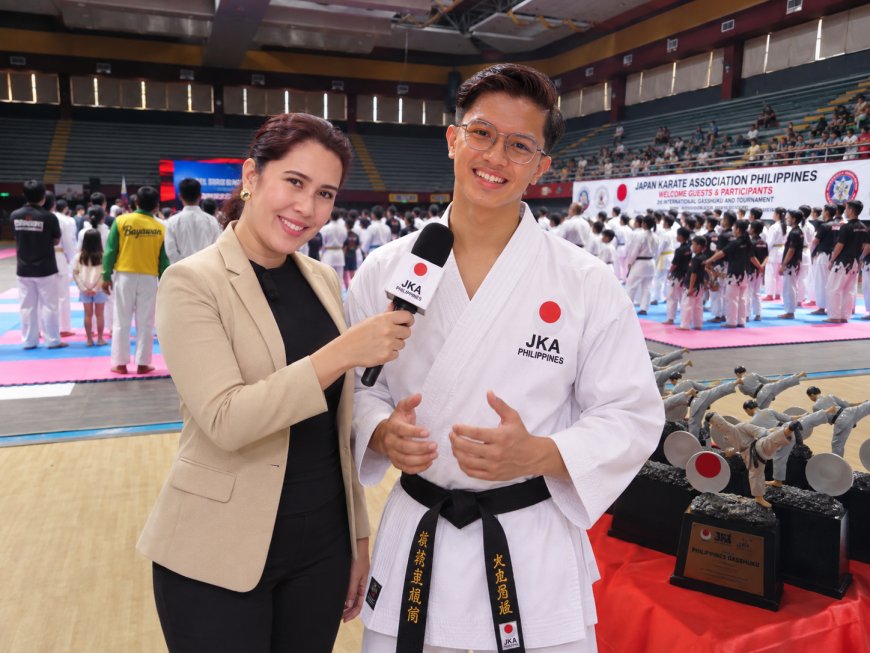
Part VII — Advocacy and Public Engagement
76. What advocacy is closest to your heart?
Youth development and faith-centered character formation are closest to my heart. I want children to develop confidence without arrogance and strength guided by kindness.
77. How will you connect that advocacy with your ambassador role?
I want to demonstrate that karate cultivates respect, discipline, and service—the same values young people need to flourish at home, in school, and in their communities.
78. What community activity would you like to lead or support?
I would like to support free introductory karate workshops for young people, values-formation seminars, and service activities that bring children, parents, and neighbors together.
79. What JKA Philippines content would you like to create?
I would like to create short training videos, practical character-building messages, behind-the-scenes glimpses of competition preparation, and personal stories that present karate as a way of life.
80. Are you interested in school visits, demonstrations, youth programs, charity events, or seminars?
Yes. I would be honored to participate in all of them, particularly school visits and youth programs where I can speak directly with young Filipinos and encourage them to believe in their potential.
81. What message would you like to promote on social media?
I want to promote faith, humility, discipline, and progress over perfection. Social media often shows only finished success; I also want people to see the honest work and setbacks behind growth.
82. How can your studies, talents, and interests help promote JKA Philippines?
My experiences as a student-athlete, international competitor, altar-server leader, and karate instructor allow me to connect with different audiences. I can show how karate values apply to education, faith, leadership, and ordinary daily life.
83. What campaign would you like to introduce as Brand Ambassador?
I would like to introduce “Respect and Discipline Start With Me,” a youth campaign encouraging respect for elders, personal responsibility, and service alongside karate training.
84. What part of your life should people see beyond official karate photographs?
I want people to see my faith, my Church service, my love for my family, and the everyday challenges of being a student-athlete. Behind the uniform, I am still a young person learning, growing, and trying to do good.
85. How will you use your public influence responsibly?
I will be careful with my words and conduct, acknowledge my mistakes, and use my platform to encourage rather than belittle others. Influence should create hope, unity, and positive action.
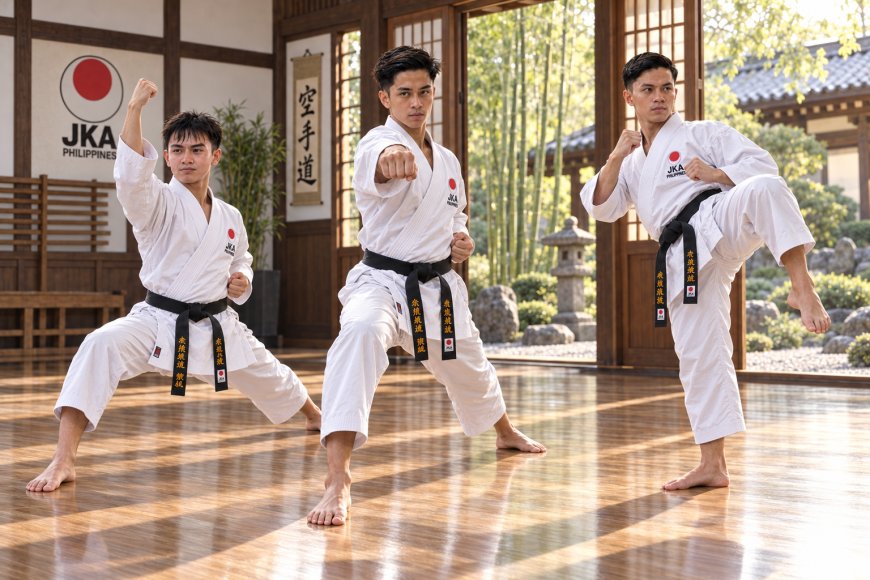
Part VIII — Future and Legacy
86. Where do you see yourself in three to five years?
I hope to have completed my studies, to be competing internationally at a higher level, and to be guiding younger karateka as both a role model and instructor.
87. What do you still hope to accomplish in karate?
I hope to win further international honors, earn a higher rank, continue developing as an instructor, and help strengthen the Philippines’ presence on the international karate stage.
88. How would you like to grow through this ambassador role?
I want to become a more confident communicator, responsible leader, and generous servant of the community. The role should not simply make me more visible; it should make me more useful to others.
89. How would you like people to remember you as a JKA Philippines representative?
I hope people remember me as someone who remained humble, respectful, and faithful—someone who carried the JKA emblem with honor and treated others well, regardless of status.
90. What lasting contribution would you like to make to Philippine karate?
I would like to help build a more united and welcoming karate community where young people from different backgrounds feel that excellence is possible for them.
91. What positive change would you like to inspire among young Filipinos?
I want young Filipinos to choose discipline over convenience, kindness over pride, and faith over fear—especially when the right choice is the more difficult one.
92. What legacy would you like to leave inside and outside the dojo?
I want my life to show that true strength is expressed through humility, real success is measured through service, and we rise higher when we help others rise with us.
Part IX — Official Profile Information
93. Short personal biography
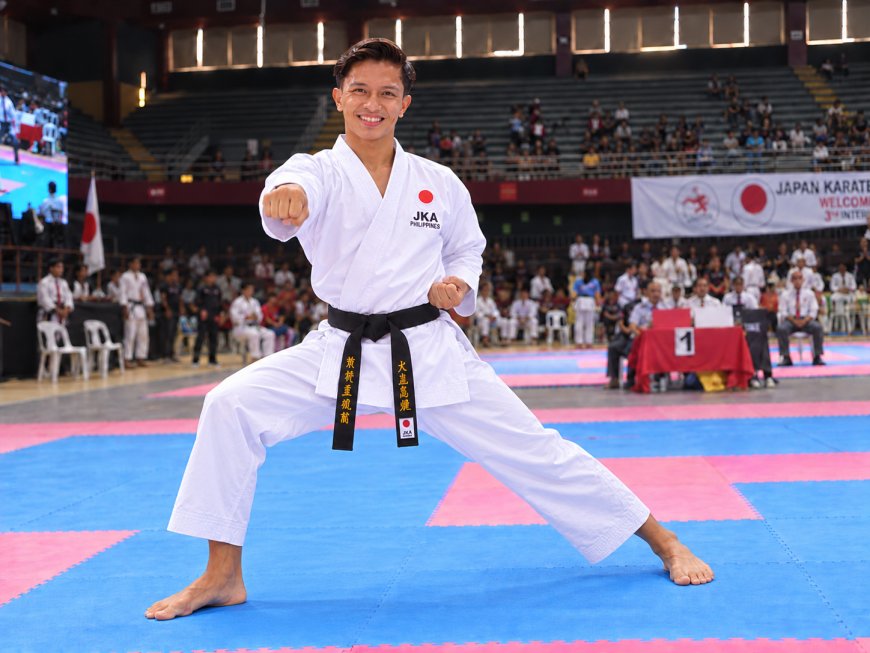
Shemael Morata Murillo is an 18-year-old Accountancy student, second-dan black belt, international competitor, and JKA Philippines Brand Ambassador from Antipolo City. He began karate at six, initially to learn self-defense, but soon discovered a discipline that would shape his character and direction in life. His journey has brought him to the World Cup in Japan and earned him medals in national and international competitions. Beyond the dojo, Shemael serves as the head of his church’s altar servers and helps teach karate to younger students. Guided by faith, humility, and perseverance, he hopes to represent the Philippines on the international stage while inspiring young Filipinos to begin courageously, remain disciplined, and understand that the strongest karateka is one who uses his abilities in service to others.