Coffee with Noubikko (P3) : Gen Z on “The Ride of the Century”
In the second installment of Coffee With Noubikko, he discusses curiosity and modern luxury, across generations and his continuing education—much of it now conducted informally by members of Generation Z. Noubikko describes artificial intelligence as one of the most fascinating developments he has encountered.
 Dante Ulanday - Senior News Editor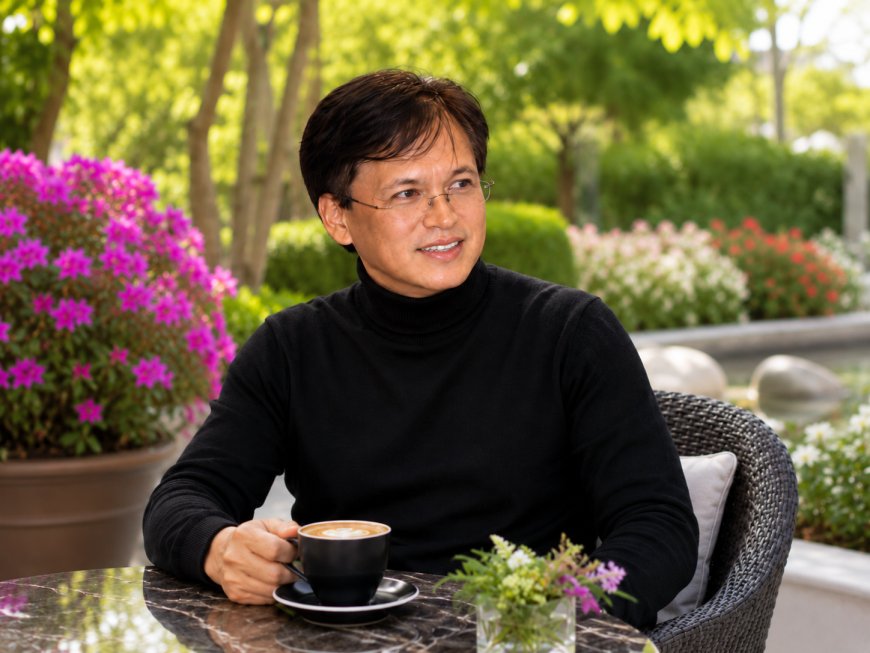
July 5, 2026 — Prague, Czech Republic — Artificial intelligence may be learning how human beings speak, write and create, but people must still teach it why kindness, responsibility and compassion matter, according to designer, entrepreneur and media personality Noubikko.
“I do not see artificial intelligence as something to fear,” he says. “I see it as the ride of the century. I am simply trying to enjoy the ride without accidentally pressing the wrong button.”
For him, technology is not a way to prove that he can keep up with younger people. It is an opportunity to listen to them, learn how they think and better understand the world they are helping to create.
“Generation Z does not need me to explain the future to them,” he says. “Many times, they are the ones explaining it to me.”
He laughs as he recalls how naturally younger people move between social media, artificial intelligence, video editing and online communication.
“They can create a video, edit it, add music and publish it before I finish deciding which pair of eyeglasses to wear,” he says. “That deserves respect.”
Curiosity as a Lifelong Habit
Noubikko says curiosity has guided him through different cities, careers, industries and generations.
“I have always been hungry for information,” he says. “I enjoy observing people, noticing patterns and asking questions.”
Throughout his life, he has wondered why one restaurant attracts a crowd while another remains empty, why one city feels alive while another feels tired and why certain people appear fulfilled while others continue searching for something they cannot quite name.
“Curiosity introduced me to many of the opportunities I have had,” he says. “It also introduced me to many of the people I treasure.”
For Noubikko, curiosity is not simply about collecting facts. It requires being willing to listen, reconsider familiar beliefs and admit when someone else understands a subject better.
“There is a special freedom in saying, ‘I do not know. Please explain it to me,’” he says. “You learn much faster when you are not busy pretending to know everything.”
He believes the world is constantly offering lessons, many of them free of charge.
“The problem is that free lessons do not always arrive with certificates,” he says. “Sometimes they arrive through a young person showing you why nobody uses that app anymore.”
The Difference Between Looking and Observing
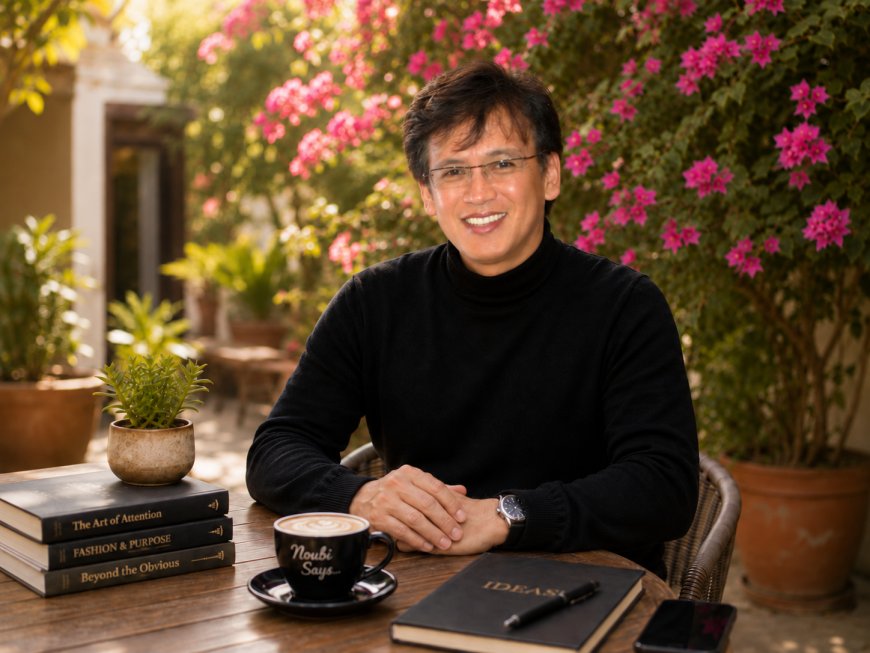
One of the most important lessons Noubikko believes people can develop is the ability to pay attention.
“Most people are looking,” he says. “Very few are truly observing. There is a difference.”
He believes people can value the past without expecting the present to behave exactly like it.
“The world continues to change,” he says. “We do not have to abandon who we are, but we should occasionally update our software.”
What Generation Z Is Teaching Him
Noubikko says technology has helped him build meaningful connections with younger people, particularly members of Generation Z.
Rather than focusing on the difference in their ages, he is interested in the difference in their perspectives.
“They are teaching me how they communicate, how quickly they process information and how naturally they move between the physical and digital worlds,” he says. “I find that very interesting.”
He also admires their willingness to question traditional systems and expectations.
“Gen Z will ask why something is being done a certain way,” he says. “And sometimes the only honest answer is, ‘Because that is how we have always done it.’ That is not always a very convincing answer.”
Noubikko believes younger generations are encouraging older professionals to communicate more clearly, move more quickly and examine habits that may no longer be useful.
“They are teaching me not to become too attached to a format simply because it worked twenty years ago,” he says. “The message may still matter, but perhaps the audience is no longer waiting for a postal letter.”
At the same time, he believes experience can contribute patience, historical context and a better understanding of consequences.
The goal, he says, is not for one generation to lecture the other.
“It should be an exchange,” he explains. “They help me understand what is coming. I can sometimes help explain what came before and why certain lessons are still worth remembering.”
For Noubikko, the most valuable conversations happen when neither side is trying to prove superiority.
“I do not want to speak to Gen Z as someone standing above them,” he says. “I would rather sit across from them, preferably with coffee, and ask what they are seeing that I may have missed.”
Artificial Intelligence as a Creative Partner
Noubikko uses artificial intelligence to explore ideas, organize information, preserve stories and develop content for different platforms and audiences. He is updating himself at a pace few can imagine.
He is particularly interested in how AI can help communicate the same idea through an article, video, interview, social-media post or documentary concept.
“Artificial intelligence helps me take an idea and examine it from different directions,” he says. “It does not replace curiosity. It gives curiosity more tools.”
He also uses AI to understand how younger audiences consume information.
“Sometimes I begin with a long article,” he says. “Then someone from Gen Z reminds me that I may have approximately seven seconds to capture their attention.”
He pauses and smiles.
“That is pressure.”
For Noubikko, artificial intelligence is not a substitute for human creativity. It is a partner that can help people experiment, research, organize and communicate more effectively.
“AI can help you produce something quickly,” he says. “But quickly does not always mean wisely, beautifully or truthfully. Human judgment still has to enter the room.”
He believes the technology is most useful when people approach it with clear intentions and remain willing to question its answers.
“I do not treat AI as an all-knowing authority,” he says. “I treat it as a very fast assistant that occasionally needs supervision.”
Teaching Technology the Meaning of Kindness
When asked how he develops his relationship with artificial intelligence, Noubikko returns to the subject of responsibility.
“I use AI with curiosity, but also with care,” he says.
Artificial intelligence can recognize patterns in language and generate convincing responses, but it does not experience human life in the same way people do.
“It does not sit beside someone in a hospital,” he says. “It does not miss a friend. It does not know what it feels like to forgive somebody or to be forgiven.”
Nevertheless, Noubikko believes people can teach technology the language and principles of kindness through the way they use it.
“We teach it through the questions we ask, the words we choose and the values we bring into the conversation,” he says.
He argues that artificial intelligence will inevitably reflect something about the intentions of the people who develop and use it.
“Technology may provide intelligence,” he says, “but human beings must provide the humanity.”
That responsibility does not belong only to engineers, technology companies or programmers. It also belongs to everyday users.
Every instruction, correction and decision helps shape how AI is applied.
“Technology can not replace human kindness,” he says. “But, it help us communicate kindness more clearly and extend it more widely.”
Noubikko believes progress becomes less meaningful when it loses its connection to human welfare.
“We can build very intelligent machines,” he says. “But if we become less patient, less honest and less compassionate in the process, then perhaps we have misunderstood the assignment.”
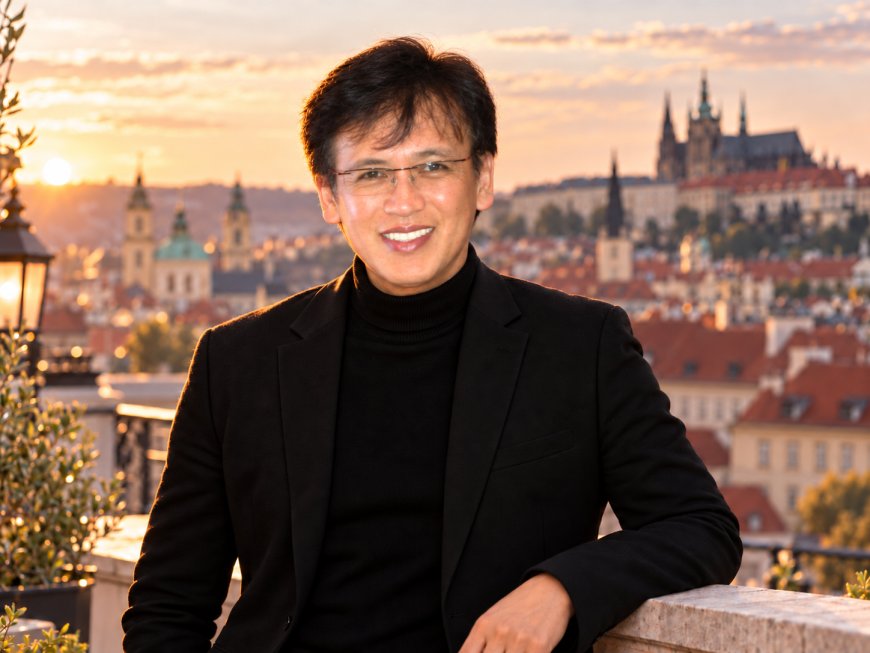
A Quieter Definition of Luxury
The conversation also explores how Noubikko’s definition of luxury.
His present idea of luxury includes a quiet apartment, a comfortable chair, reliable internet, a beautiful view, a good cup of coffee and enough uninterrupted time to enjoy them.
“The finest things in life rarely need to announce themselves,” he says. “They arrive quietly, and when you are paying attention, you notice them.”
The same principle, he believes, applies to technology.
Its value should not be measured only by speed, but by whether it improves human life, encourages creativity and strengthens meaningful relationships.
“The best technology quietly helps you do something useful and then allows you to return to being human.”
Different Generations at the Same Table
Looking back on a career that has e decades of entrepreneurship, Noubikko says curiosity remains the connecting force.
“I never stopped being curious,” he says. “I never stopped enjoying conversations, and I never stopped believing that every person has a story worth hearing.”
Today, some of the stories and lessons that interest him most are coming from younger people navigating a world very different from the one in which he began his career.
“I am not trying to become Gen Z,” he says. “I do not think they are accepting applications.”
What he wants is to understand their ideas, respect their strengths and remain open to learning from them.
“They are showing me new ways to create, communicate and look at the world,” he says. “That is something to appreciate, not resist.”
He believes experience and innovation should not be seated on opposite sides of the room.
“They belong at the same table,” he says. “Experience can offer context. Youth can offer a new direction. Curiosity allows both to listen.”
As artificial intelligence becomes increasingly present in communication, education, business and creativity, Noubikko believes society must ensure that technological progress remains connected to compassion.
“Fashion introduced me to people. Curiosity taught me how to appreciate them. Generation Z is teaching me new ways to communicate with them. Technology allows the conversation to continue, and kindness reminds us why the conversation matters.”
His message for the future is direct:
“Technology may learn our language, but humanity must teach it kindness.”
About Coffee With Noubikko
Coffee With Noubikko is a conversational interview series exploring Noubikko’s perspectives on life, fashion, business, culture, technology and communication across generations. Through personal reflections and candid conversations, the series brings different generations and viewpoints together—preferably over a good cup of coffee.